New Digital Nomads or: how to pursue a PhD in times of Covid-19
Written for the research blog of Urban-rural migration and rural revitalization in Japan (ed. prof. C. Reiher, Freie Universität Berlin).
These days, I like to explore the beaches of Miyako Island, a remote island of Okinawa prefecture. I especially like the south-east side of the island; from the Higashi Hennazaki Cape, you can see the sea at both of your sides. There is a white lighthouse at the very end of it. Its straight silhouette rises above the green grass and other vegetation that grows beside the concrete path. A bit earlier, there is an outpost with some tables and planters with tropical sago palms that seem somewhat out of place. The text “wonderful sport island” adorns from the wall — a leftover from the All Japan Triathlon. I can imagine the cape is a well-known tourist attraction, yet, moving towards the end of the road, I only come across two other people. The man and woman wear casual long-sleeves and I guess that they are middle-aged, despite the fact that their faces are blurred. When I arrive at the lighthouse, the sun is already starting to set. The weather is not too great today; at the horizon, there are some slight orange tints coming from behind the dark blue clouds. The sea is equally dark and grey. Looking at the white foam below me, I can imagine how the waves rhythmically break on the rocks. I wonder how many people have walked this digital road before me, visiting Miyako-jima via their screens plugged in at places all over the world.
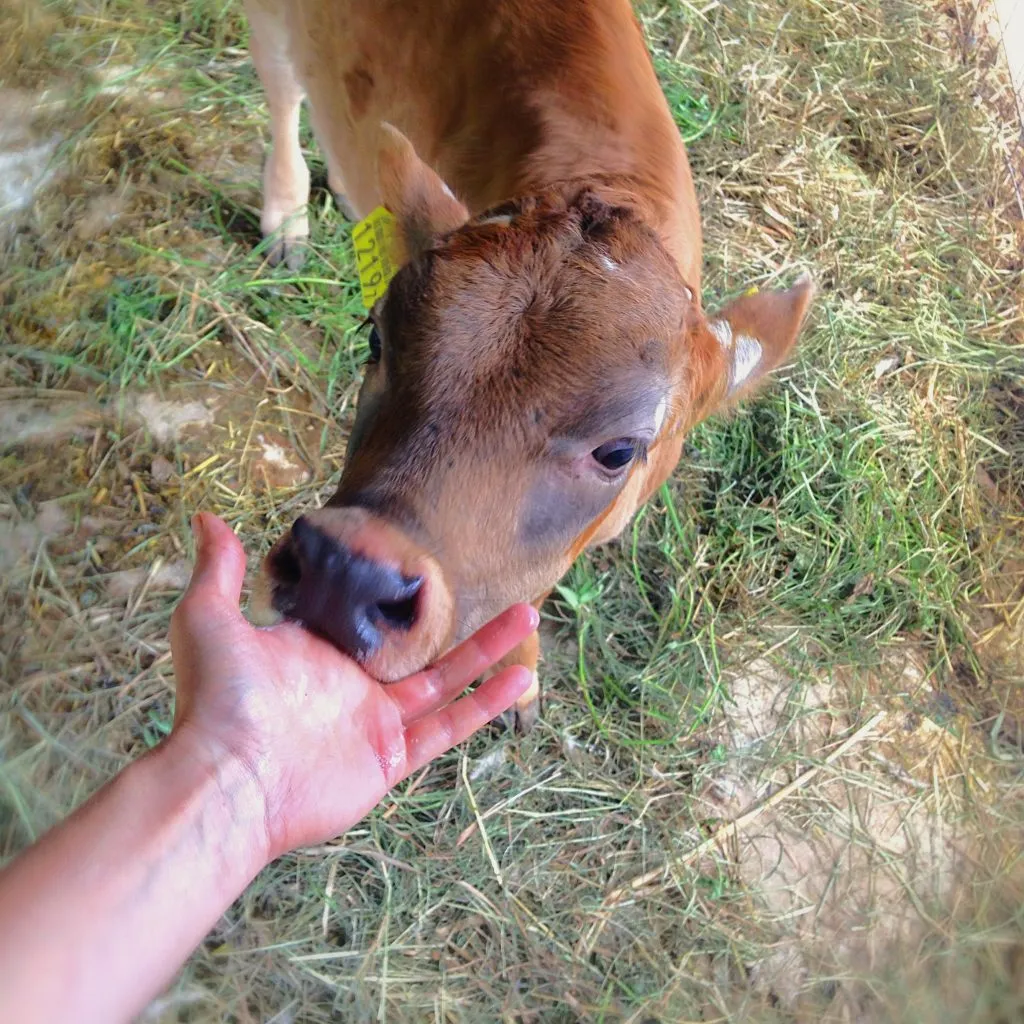
Encountering nature on Okinawa main island · Copyright © Sarah Bijlsma 2019
I was supposed to be physically on Miyako right now, conducting fieldwork for my dissertation. Covid-19 is keeping me in Germany. It took me a while to give up the hope to bypass the Japanese border system and to accept that I would spend the winter at my dinner table in Berlin. It also took some time to accept that if I did not want to run out of time, I had to start planning things differently, rethink my objectives and research questions, and rewrite my initial research design.
Changing plans meant first and foremost changing my research methodologies. Studying human-environment relationships within the community of Japanese emigrants to Miyako Island, my project heavily draws upon participant observation. Rather than explaining me their thoughts, I was hoping to understand how my future interlocutors create performative and conceptual relationships with the territory and inhabitant species of Miyako-jima. As so many anthropologists this year, I turned towards “digital ethnography” as an alternative for being physically present. In my case, I started reading weblogs of young migrants who in recent years moved to the small island from one of the urban centers of Japan. I was initially hesitant to use social media as data source — is discourse analysis edgy enough, am I not compromising myself too much? Yet, looking back on the past few months, the inability to travel has proven to be both a restrictive and a productive force that added to my research in meaningful ways.
One. I learned that human-nature relationships are not bound to the world of flesh and fur but exist also very much in cyberspace. Two. I learned that media representations of places feed into the way how people make sense of their new environments, crossing timescapes when combining previous expectations with future dreams. Three. I learned that the sea of Miyako is not blue, but “emerald green” and that its properties can be transmitted via so-called healing videos. Four. I learned that digital diaries contain much hidden messages, and that also writing is a performative act that materializes links between people, nature, and place. Five. I learned that even during the most unexpected events — what the Corona pandemic certainly is — that one can always find creative ways to tell the stories that matter.
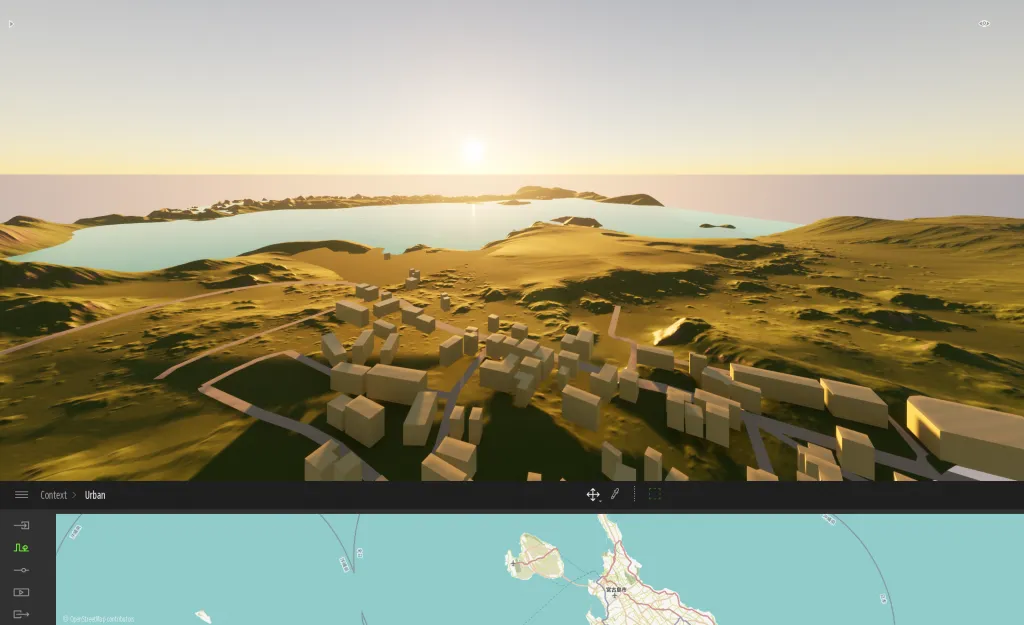
3D model of Miyako Island · Copyright © Sarah Bijlsma 2021
Last weekend, the Olympic Games Committee made the final decision that foreign visitors are not welcome this summer. I know that this means that I might not make it into Japan this year. Pursuing a PhD amidst so much uncertainty is not easy, and in this regard, Covid-19 is for many of us an exercise in flexibility above all. Yet, as I get to know Miyako-jima and its inhabitants better, rethinking the relation between material and virtual (is)landscapes, I do believe this exercise is a valuable one. I have a long list of things I still want to find out, and the entire digital world as a playground.
Originally published 31 March 2021 as Sarah Bijlsma. Original post